Riding Through History – D-Day Normandy Tour
Some motorcycle trips are built around scenery, some around roads, and some simply around the joy of travelling from place to place without much reason beyond the ride itself. This trip to Normandy in 2025 was different, because the purpose of it was not only the ride but the history that lies across that coastline. The plan was simple enough on paper: spend roughly a week riding across the D-Day landing areas, visiting the sites that played such a crucial role in the Allied invasion of 1944, and take the time to properly see the places that most people only recognise from books and documentaries.
Normandy has a way of quietly reminding you that you are travelling through somewhere that changed the course of history. The roads are peaceful now, the countryside is green and calm, and small villages sit quietly between fields that once saw some of the most intense fighting of the Second World War. Riding through those places on motorcycles gives you the freedom to move slowly, to stop wherever something catches your attention, and to absorb the atmosphere in a way that is very different from rushing through in a car or on a bus tour.
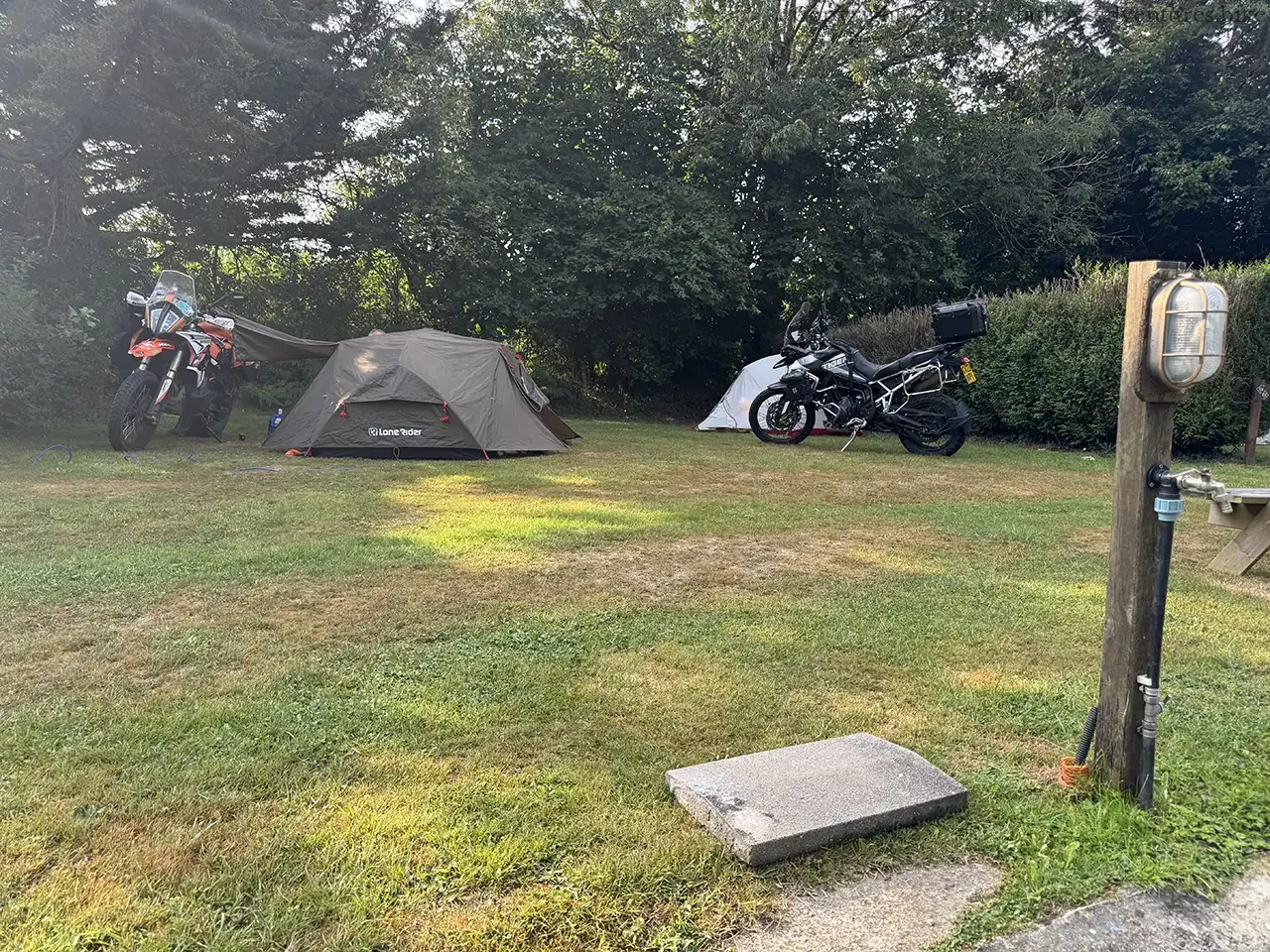
For this trip we based ourselves for the week at a campsite called Camping Sous Les Étoiles Normandie, located in Saint-Martin-des-Besaces in Calvados. The campsite is run by an English family and turned out to be a perfect base for exploring the region, with a fantastic bar, excellent food and the sort of relaxed atmosphere that makes it easy to spend evenings talking about the day’s riding and the history we had just seen.
The location worked particularly well because from there we could ride out each morning in different directions across the Normandy countryside, visiting the beaches, museums and monuments that mark the events of June 1944, before returning in the evening to the same quiet corner of rural France.
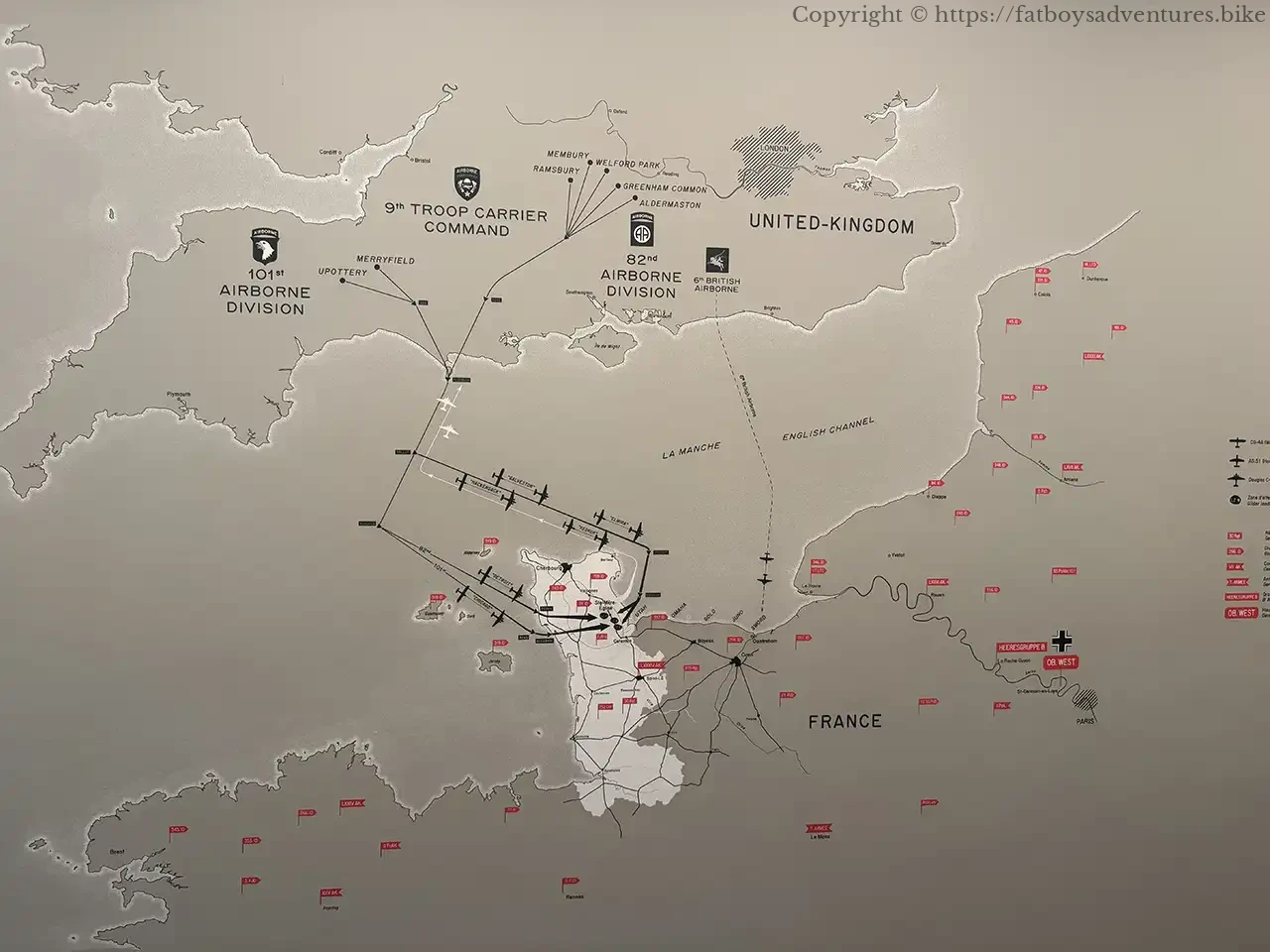
Graignes and the Airborne Landings
One of the first places we visited was the D-Day village of Graignes, a small and peaceful place today but one that saw fierce fighting during the airborne landings that supported the invasion. Walking around places like this gives you a completely different perspective on the scale of the operation, because the terrain suddenly becomes real rather than something you only see on a map.
The quiet fields and narrow lanes that surround the village were once filled with paratroopers trying to regroup, local residents caught in the middle of the chaos, and German forces attempting to push them back. Standing there now, with birdsong in the background and motorcycles parked quietly nearby, it is difficult to reconcile the calm of the present with the violence that once unfolded there.
Sainte-Mère-Église
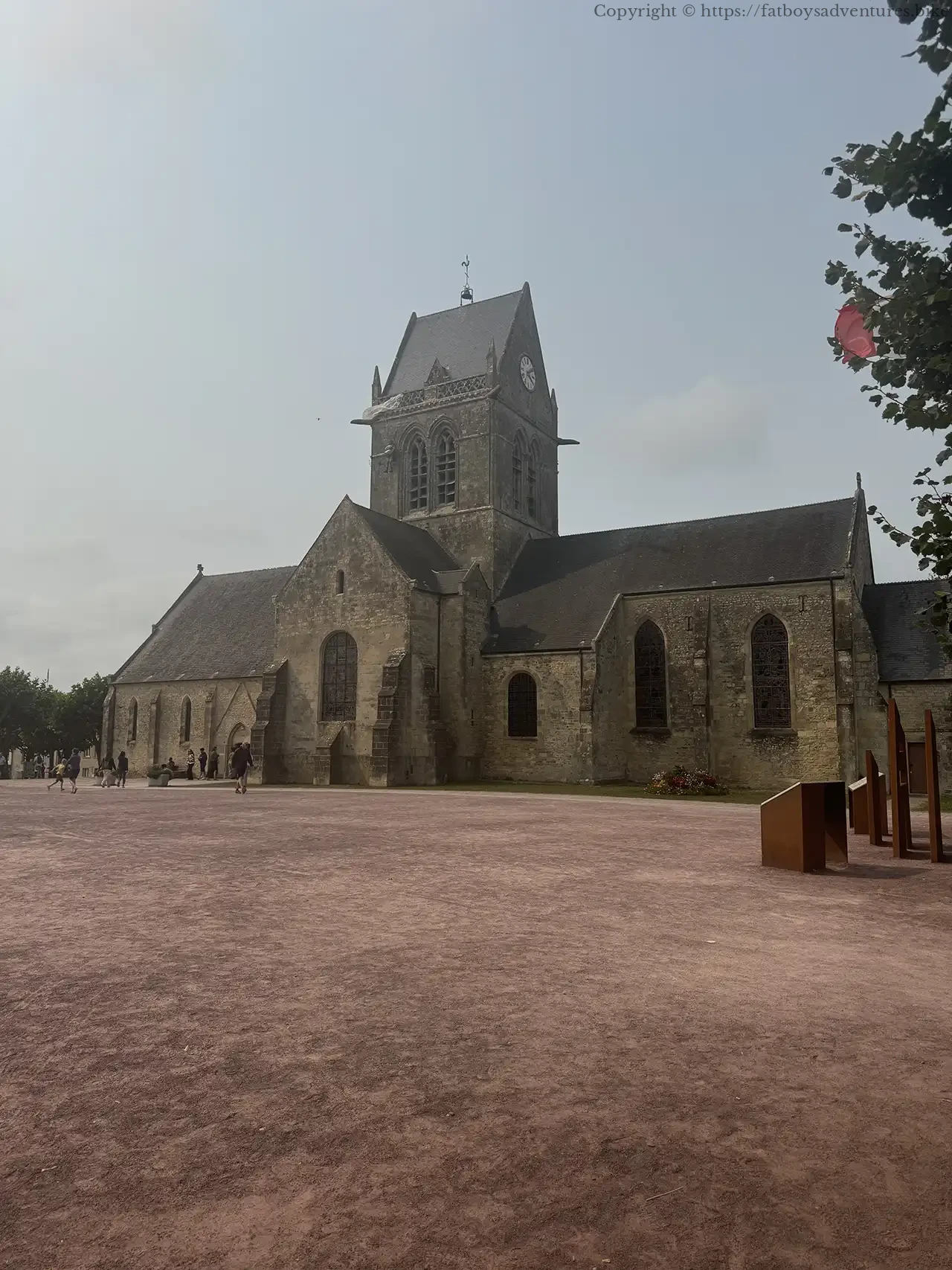
No visit to Normandy would be complete without stopping at Sainte-Mère-Église, one of the most famous locations from the D-Day airborne landings. The church is instantly recognisable because of the story of Private John Steele, the American paratrooper whose parachute became caught on the church tower during the night drop and who famously hung there while the battle unfolded below.
Today a parachute figure still hangs from the church tower as a tribute to that moment in history, and standing in the square looking up at it brings the whole story to life in a way that photographs never quite manage to capture.
Not far from there stands the Richard D. Winters Leadership Monument near Sainte-Marie-du-Mont, dedicated to the officers and soldiers who led airborne troops during the invasion. Seeing that monument in person adds another layer to the understanding of how much leadership, courage and improvisation were required for the operation to succeed.
D-DAY Utah Beach and Dead Man’s Corner
From there the ride naturally moved towards Utah Beach, one of the five beaches where Allied forces landed on the morning of 6 June 1944. Today the beach is wide, windswept and peaceful, but the memorials and museums along the shoreline remind you very quickly of what happened there.
Nearby is Dead Man’s Corner, a location whose name alone hints at the intensity of the fighting that once took place in that area. The museum there tells the story of the airborne troops who fought their way inland after landing during the early hours of the invasion.
Standing in these places brings the history much closer than reading about it ever could.
La Cambe German Cemetery
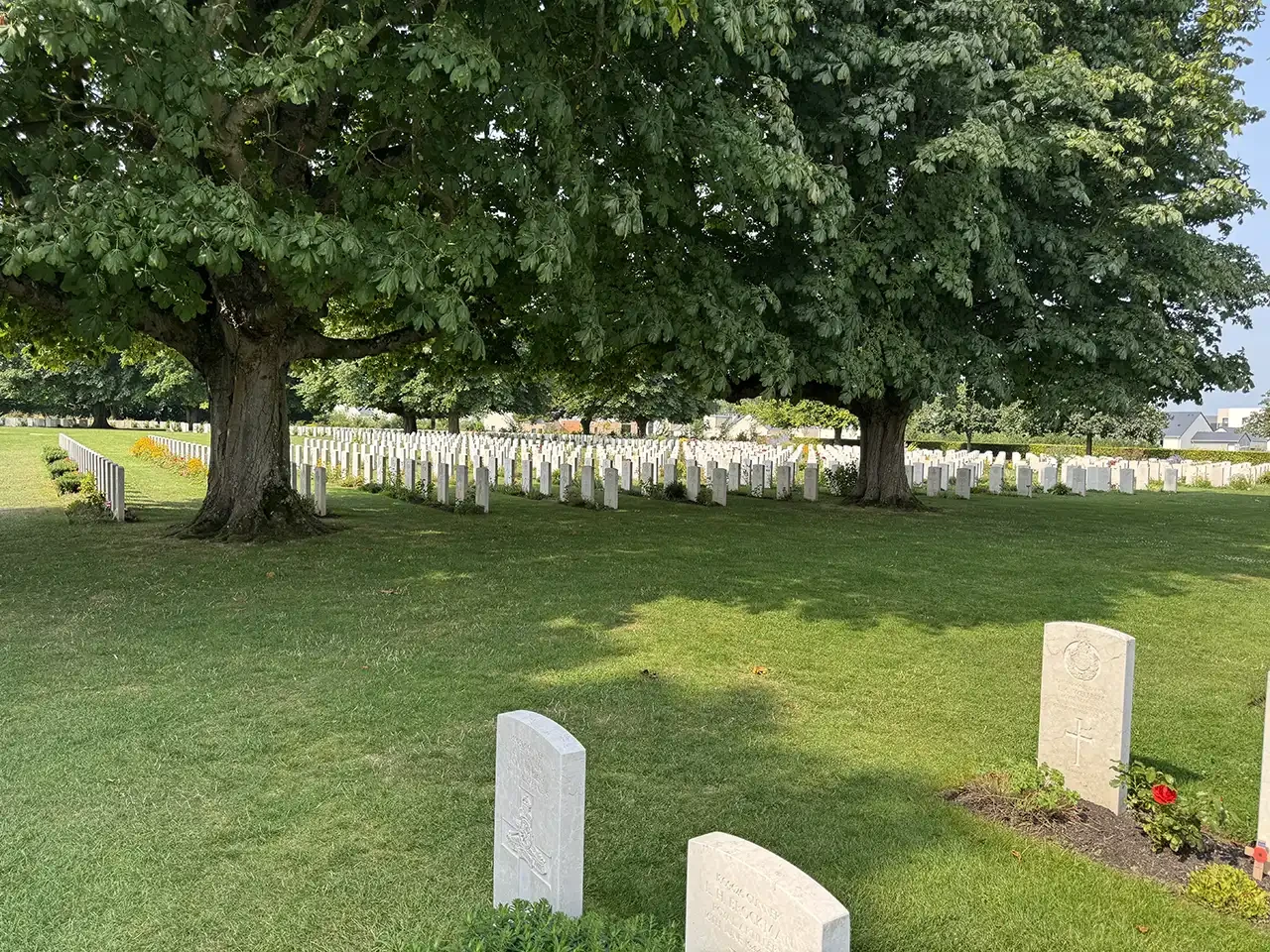
One of the most striking stops of the entire trip was the German cemetery at La Cambe. While many visitors naturally focus on the Allied memorials, walking through the rows of dark crosses at La Cambe provides a sobering reminder that thousands of young men on both sides of the conflict lost their lives during the battle for Normandy.
The atmosphere there is quiet and reflective, and it adds an important sense of balance to the experience of visiting the region.
D-DAY Omaha Beach and the American Cemetery
Few places in Normandy carry the same emotional weight as Omaha Beach, where American forces faced some of the most intense resistance on D-Day. Standing on that long stretch of sand and looking up at the cliffs behind it makes it easier to understand the enormous challenge faced by the troops who landed there.
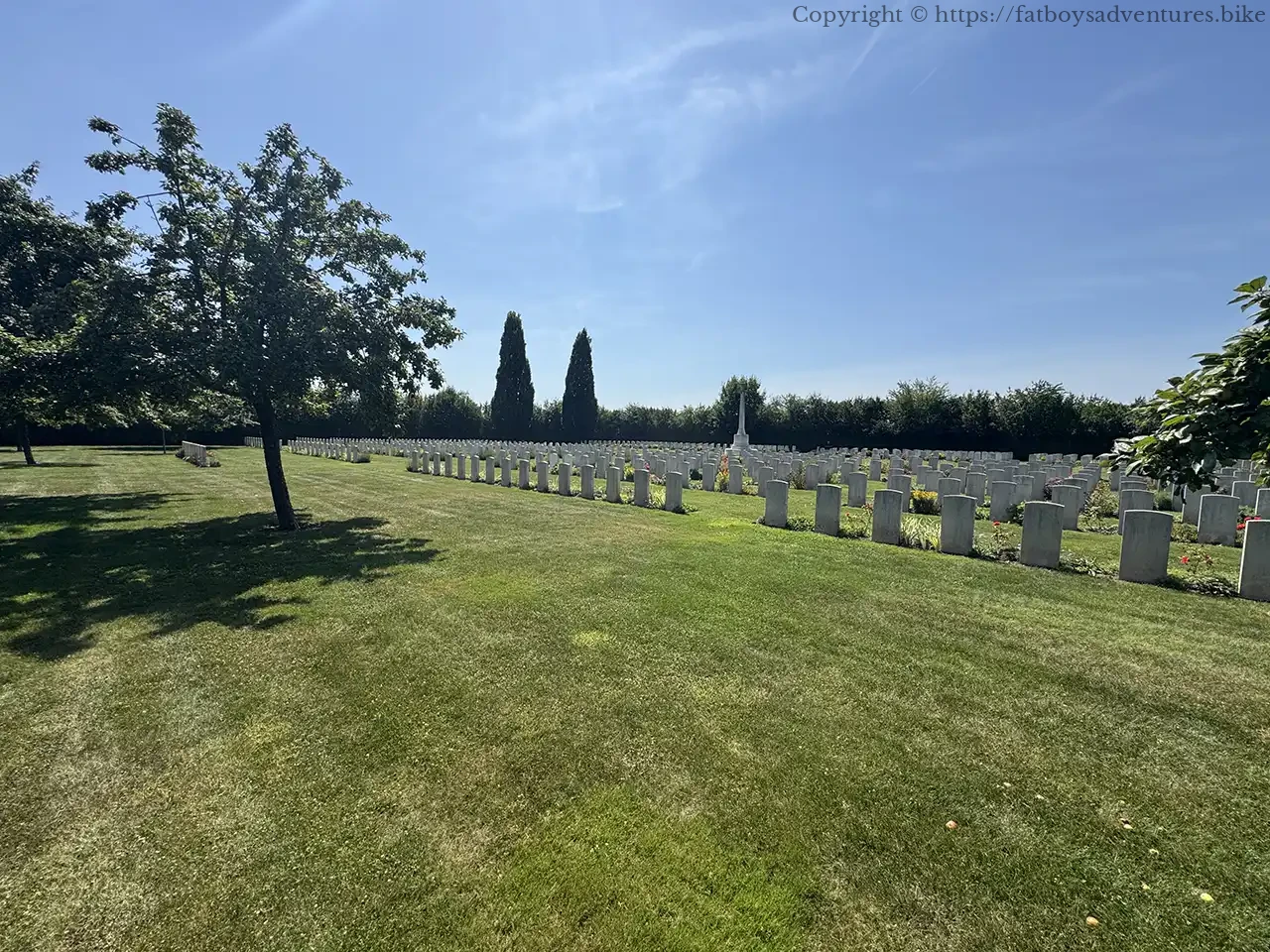
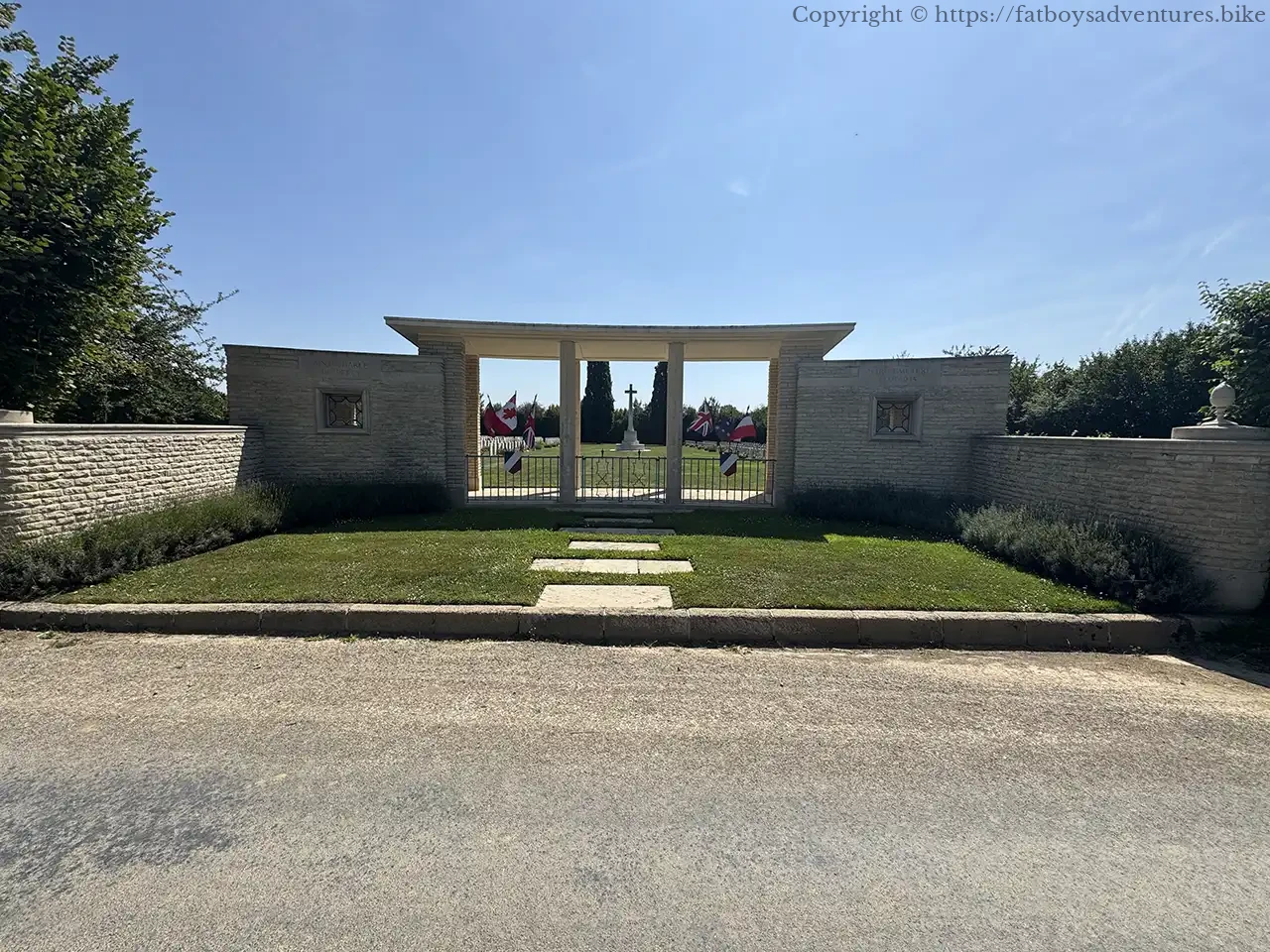
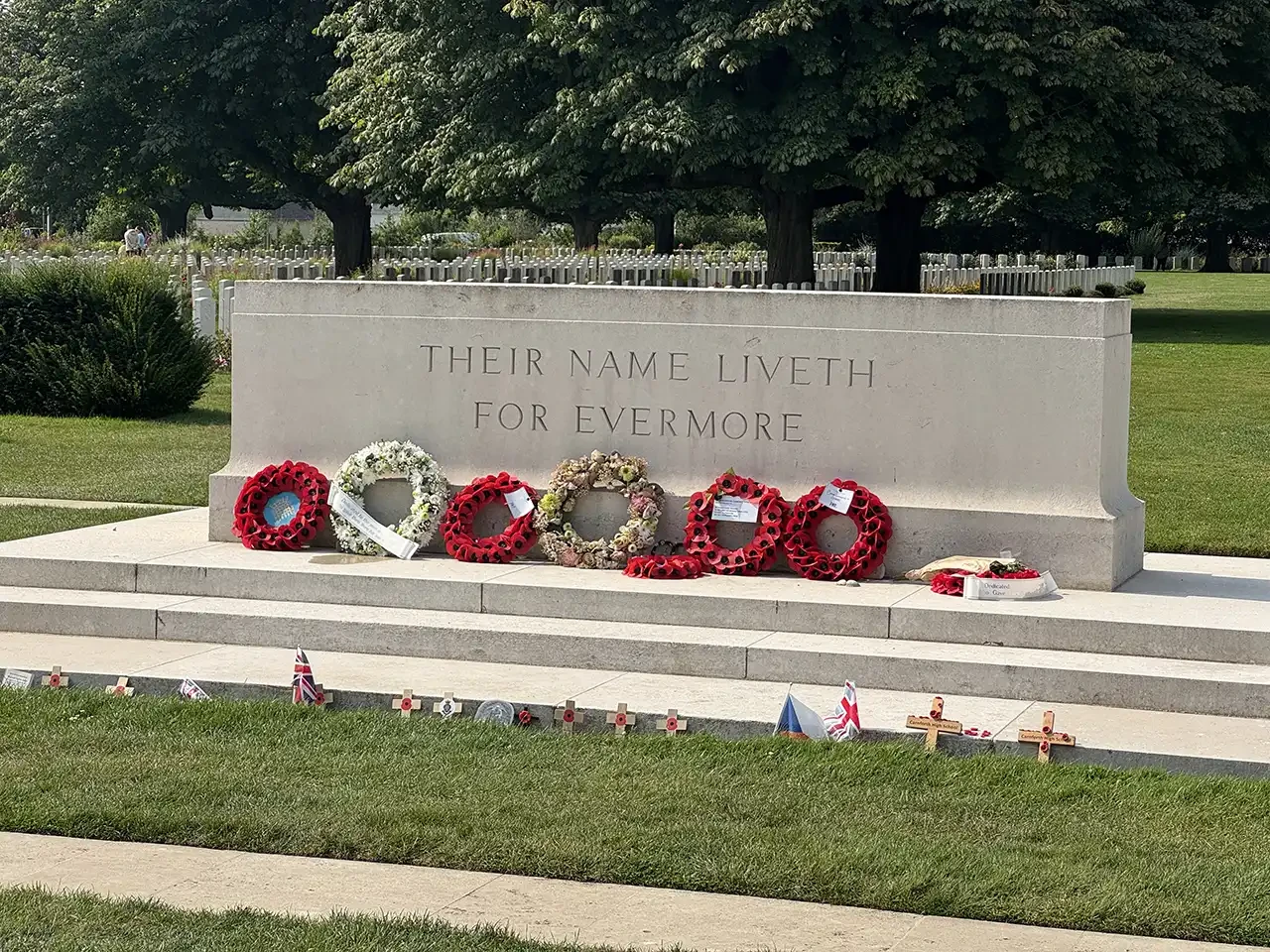
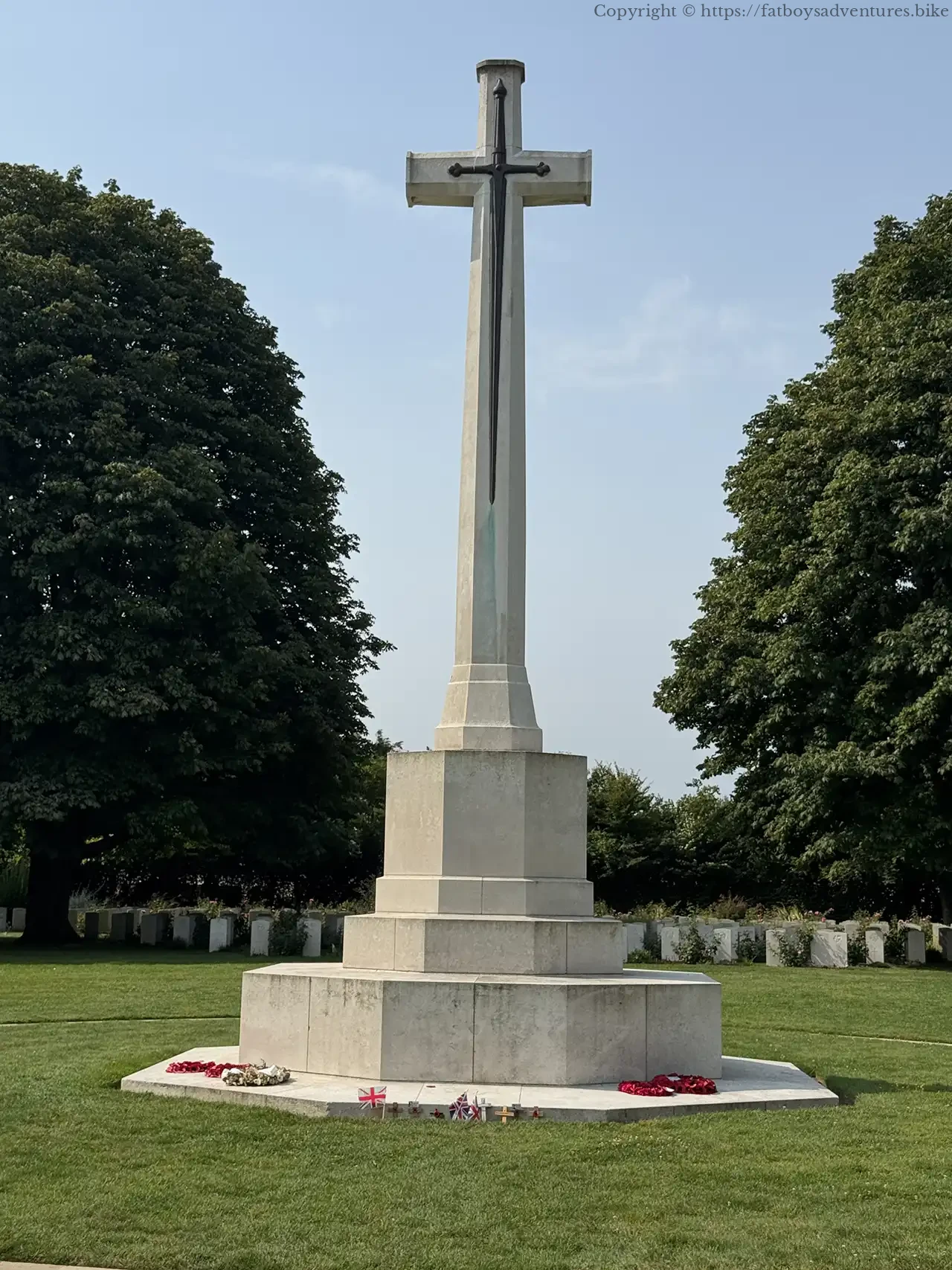
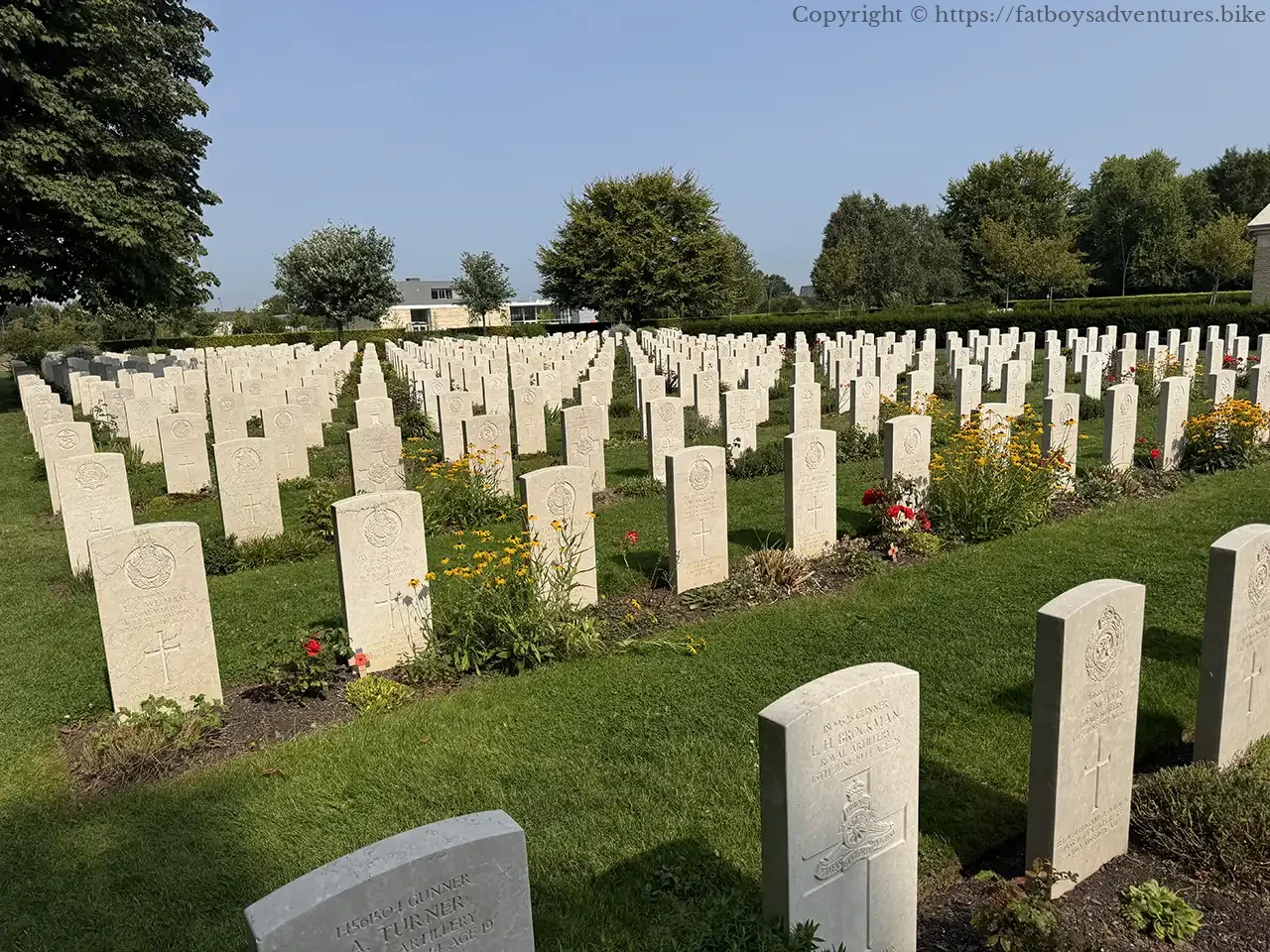
Just above the beach sits the Normandy American Cemetery, where rows upon rows of white crosses and stars of David stretch across the hillside overlooking the sea. Walking through that cemetery is one of the most powerful experiences anywhere in Normandy, because it makes the scale of the sacrifice impossible to ignore.
Pointe du Hoc
Another unforgettable stop was Pointe du Hoc, where American Rangers scaled the cliffs to destroy German artillery positions. Even today the landscape there still bears the scars of the battle, with enormous bomb craters scattered across the ground and the remains of German bunkers sitting broken along the cliff edge.
Walking across that terrain makes it clear just how extraordinary that assault must have been.
Arromanches and the Mulberry Harbour
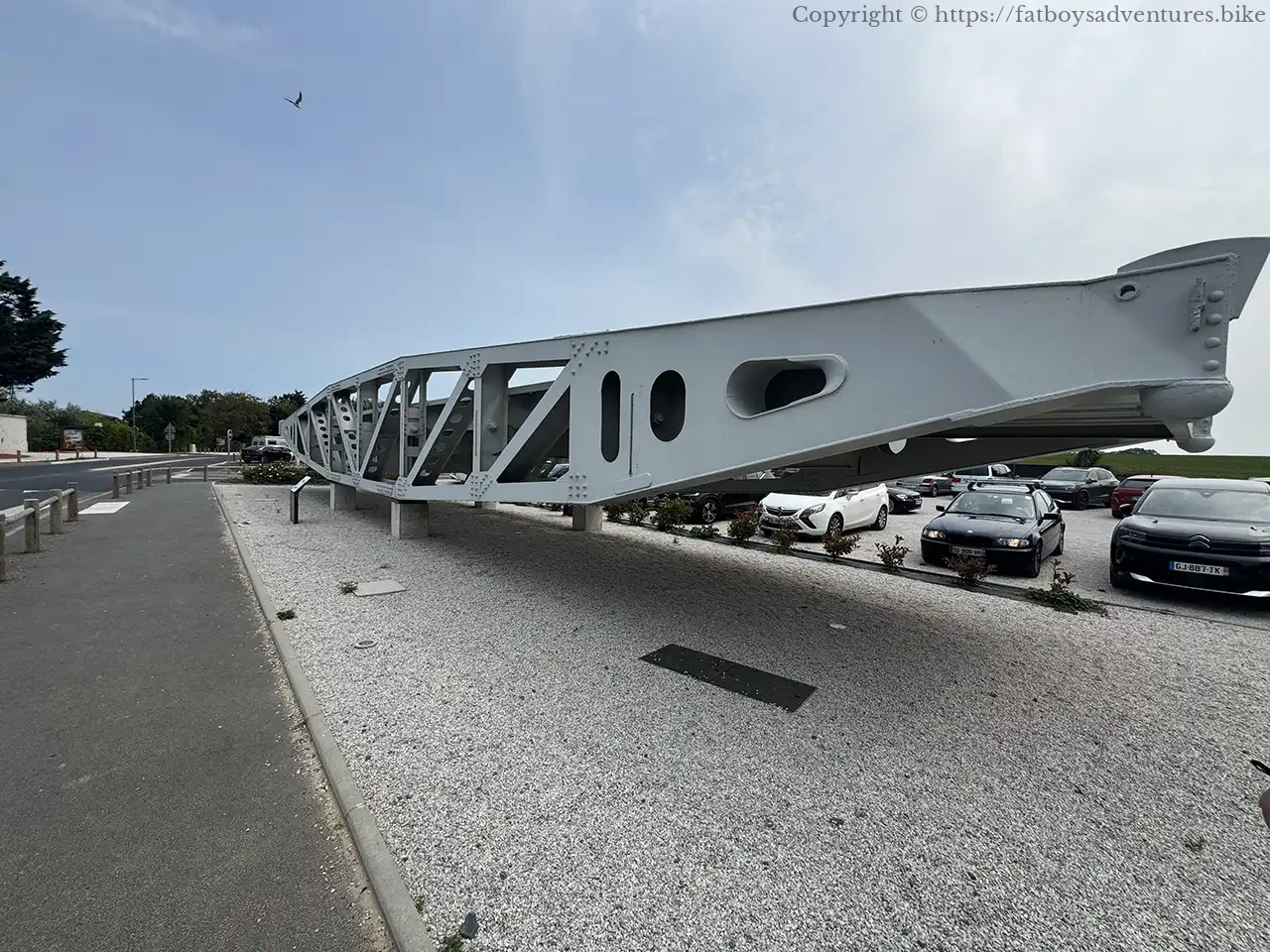
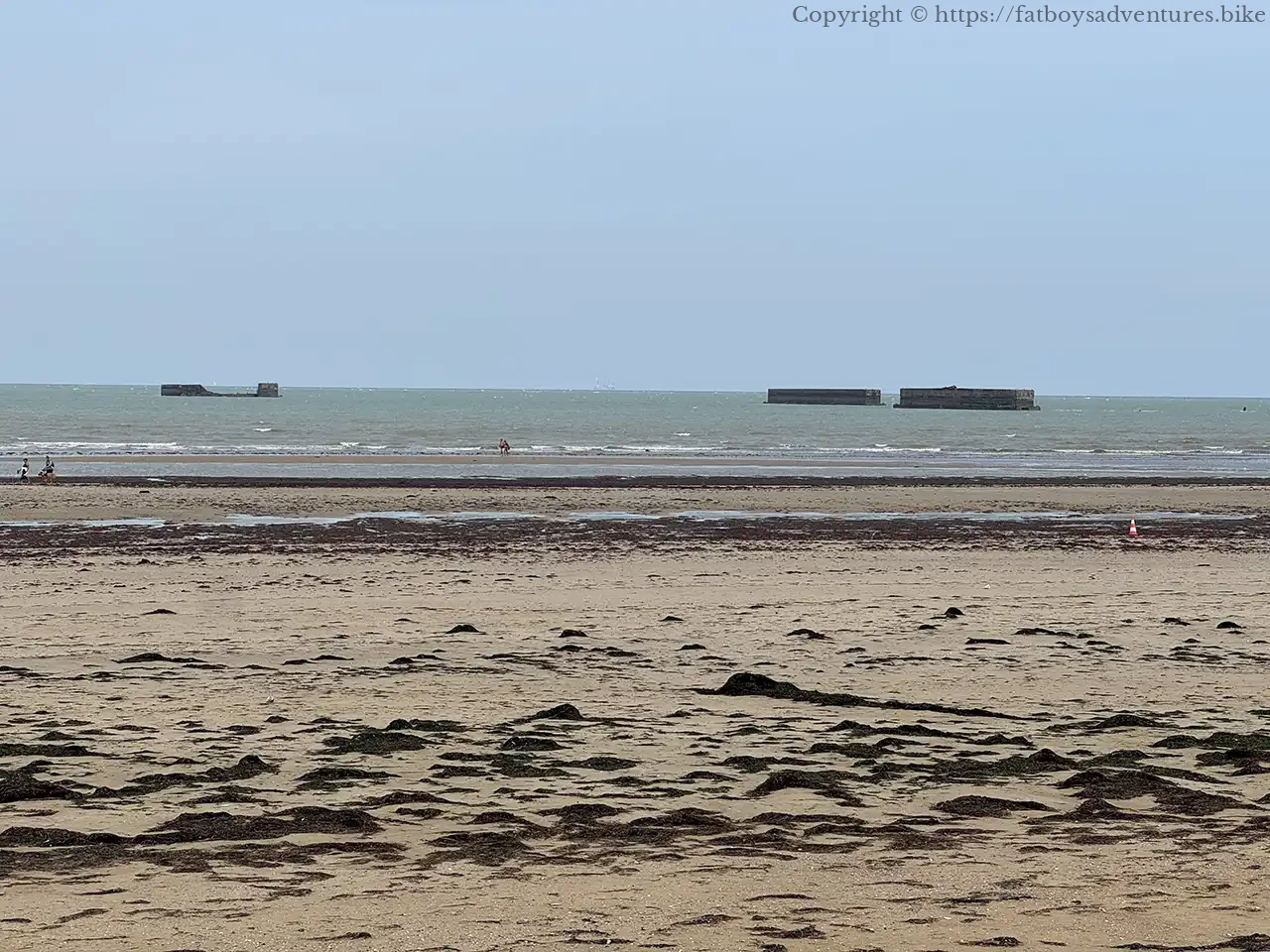
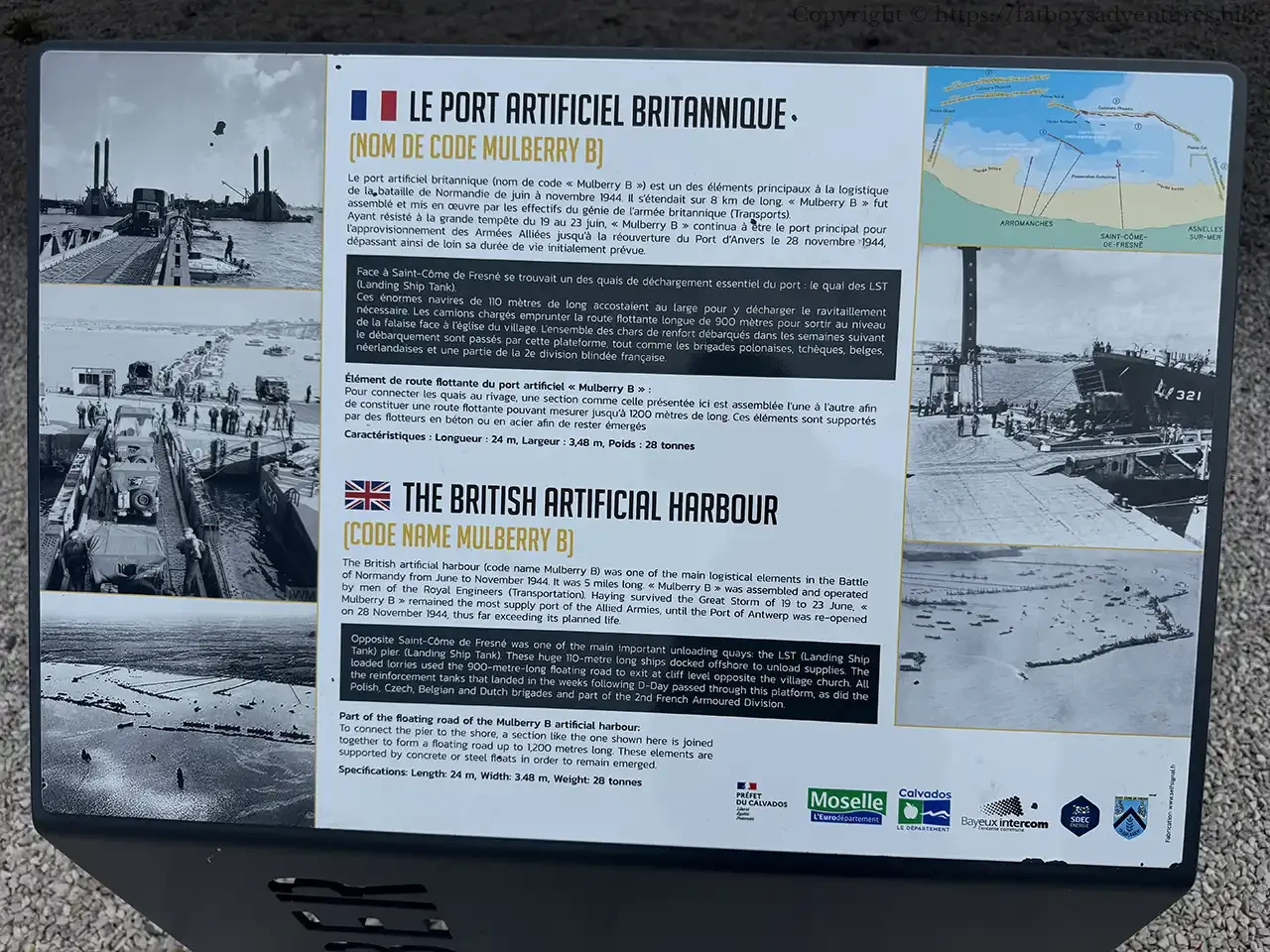
At Arromanches-les-Bains, the remains of the Mulberry Harbour still sit just offshore, visible reminders of the enormous engineering effort that followed the landings. The artificial harbour allowed Allied forces to unload vast quantities of supplies once the beaches had been secured.
Standing on the shoreline looking out towards the concrete blocks that still remain in the water gives you a sense of the scale and ingenuity behind the operation.
D-DAY Juno Beach, Sword Beach and Pegasus Bridge
Continuing east along the coast brings you to Juno Beach and Sword Beach, where Canadian and British forces landed during the invasion. Each beach has its own memorials and museums, but together they form part of the larger story of the day.
One of the final stops on the route was Pegasus Bridge, a location made famous by the British airborne troops who captured it in the opening moments of D-Day. Just beside the bridge sits the Café Gondrée, widely recognised as the first building in France to be liberated during the invasion.
Stopping there for a drink feels like a small but meaningful connection to the history of the place.
An Unexpected Discovery
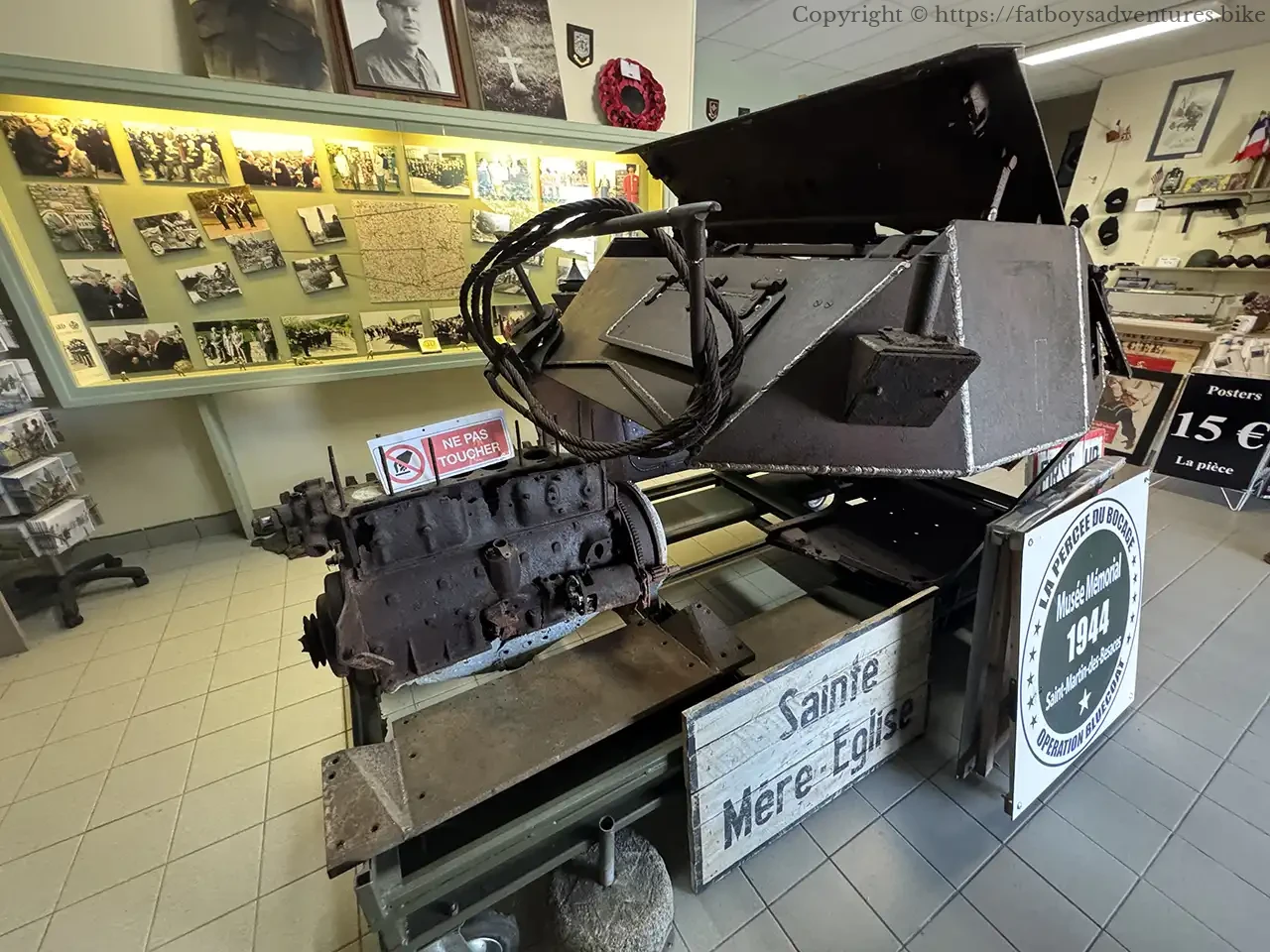
One of the best discoveries of the whole week was not even on our original plan. Just next to the campsite in the local village we found a remarkable museum called La Percée du Bocage, run by an English enthusiast who has built an incredibly detailed collection dedicated to the battle for Normandy.
The museum had been recommended to us by the campsite staff, and it quickly turned into one of the highlights of the entire trip. It was a perfect example of how some of the most memorable parts of a journey are often the ones you never planned at all.
A Week Among History
Spending a week riding through Normandy turned out to be far more than just a motorcycle tour. The roads themselves were enjoyable, winding through peaceful countryside and quiet villages, but the real impact of the trip came from being surrounded by places where history happened.
Every beach, monument and museum added another piece to the story, and travelling between them on motorcycles allowed us to experience the region at our own pace rather than rushing from one stop to another.
By the time the week came to an end and the bikes were pointed back towards home, Normandy had left a lasting impression. It is a place where the landscape looks peaceful today, yet every field, road and coastline carries echoes of what took place there in June 1944.
Take the long road home — miles today, stories tomorrow.